Philosophical classics are probably some of the most challenging books I’ve ever tried to read. They’re not the kind of books you can get through in a day. You’ll likely need several weeks and lots of attention to read and actually comprehend the themes within. It sounds like a lot of work, but it’s so worth it, and annotating and reflecting on these books is actually the fun part.
If you’ve always wanted a dense classic to bite into and challenge yourself to read something more difficult and harder to understand fully, then you’ll meet your match below. These are the best philosophical classics from some of the best writers to ever put pen to paper. Enjoy!
The Brothers Karamazov by Fyodor Dostoevsky
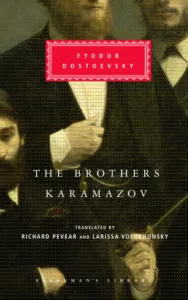
“Above all, don’t lie to yourself. The man who lies to himself and listens to his own lie comes to a point that he cannot distinguish the truth within him, or around him, and so loses all respect for himself and for others. And having no respect he ceases to love.”
Follow three very different brothers, Dmitri, Ivan, and Alyosha, as they struggle with their relationships, beliefs, and their deeply flawed father, Fyodor. When their father is murdered, suspicion falls on the brothers, particularly Dmitri, whose turbulent relationship with him gives him a clear motive. The novel combines family drama and murder mystery with profound questions about faith, morality, free will, guilt, and the nature of evil.
Stranger by Albert Camus
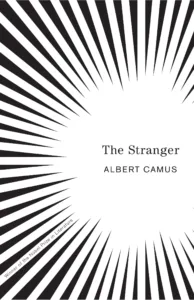
“It was as if that great rush of anger had washed me clean, emptied me of hope, and, gazing up at the dark sky spangled with its signs and stars, for the first time, the first, I laid my heart open to the benign indifference of the universe.
To feel it so like myself, indeed, so brotherly, made me realize that I’d been happy, and that I was happy still. For all to be accomplished, for me to feel less lonely, all that remained to hope was that on the day of my execution there should be a huge crowd of spectators and that they should greet me with howls of execration.”
Meursault, an emotionally detached man, seems largely indifferent to the expectations and conventions of society. After his mother’s death, a series of seemingly ordinary events leads him to commit a senseless murder on a beach. As he faces trial and confronts the consequences of his actions, Meursault becomes increasingly aware of the absurdity of existence and society’s demand that people conform to its ideas of morality and meaning.
A Room of One’s Own by Virginia Woolf
“Women have served all these centuries as looking glasses possessing the magic and delicious power of reflecting the figure of man at twice its natural size.”
This is an extended essay exploring women, literature, creativity, and the barriers that have historically prevented women from becoming writers. Woolf argues that a woman needs financial independence and a private space of her own in order to write freely and develop her creative potential. A Room Of One’s Own examines how education, poverty, gender inequality, and cultural expectations have shaped women’s literary history.
The Grapes of Wrath by John Steinbeck
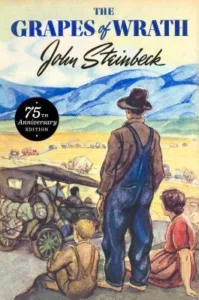
“…and in the eyes of the people there is the failure; and in the eyes of the hungry there is a growing wrath. In the souls of the people the grapes of wrath are filling and growing heavy, growing heavy for the vintage.”
The Joad family are forced to leave their Oklahoma farm during the Great Depression and travel west to California in search of work and a better life. Along the way, they face poverty, exploitation, hunger, and harsh living conditions alongside thousands of other displaced families. Through the Joads’ journey, the novel explores family, resilience, injustice, poverty, and the struggle for dignity in the face of economic hardship.
War and Peace by Leo Tolstoy
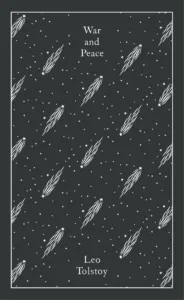
“It’s not given to people to judge what’s right or wrong. People have eternally been mistaken and will be mistaken, and in nothing more than in what they consider right and wrong.”
Several aristocratic Russian families are transformed by the Napoleonic Wars and the French invasion of Russia. The novel centers on characters such as Pierre Bezukhov, Andrei Bolkonsky, and Natasha Rostova as they manage love, marriage, friendship, loss, and personal growth amid the chaos of war.
Things Fall Apart by Chinua Achebe
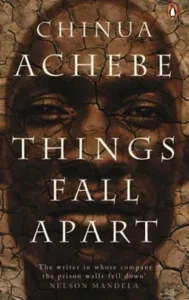
“The white man is very clever. He came quietly and peaceably with his religion. We were amused at his foolishness and allowed him to stay. Now he has won our brothers, and our clan can no longer act like one. He has put a knife on the things that held us together and we have fallen apart.”
Okonkwo, a respected but fiercely ambitious warrior and leader in an Igbo community in pre-colonial Nigeria is determined to avoid the weakness he associates with his father, Okonkwo builds his life around strength, status, and tradition. However, his world begins to change as British missionaries and colonial authorities arrive, challenging the customs and beliefs of his community and ultimately forcing Okonkwo to confront a society he can no longer control.
Middlemarch by George Eliot
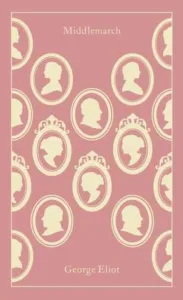
“We mortals, men and women, devour many a disappointment between breakfast and dinner-time; keep back the tears and look a little pale about the lips, and in answer to inquiries say, “Oh, nothing!” Pride helps; and pride is not a bad thing when it only urges us to hide our hurts— not to hurt others.”
Idealistic Dorothea Brooke longs for intellectual and moral fulfillment but finds herself trapped in a disastrous marriage, while ambitious young doctor Tertius Lydgate struggles to advance his pioneering medical ideas as his marriage begins to threaten his career. Alongside them are characters driven by love, money, religion, and social ambition.
Final Thoughts
If you’re looking for a challenge, these books will give you that and more. They’re difficult to get through but so worth the read so give them a try. Prepare your annotation materials, though, because you’ll need them.
If you want more good book recommendations, here’s where to start:
- If you want to read classics but don’t know where to begin, I recommend starting with these easy-to-read classic books because they’re just as important, only less dense.
- And if you’d like to get into classics but you mainly read romance, my recommendation is to try some classic romance books because they’ll suit your tastes.
- If you’re looking for something darker, gloomier, but just as good, then classic gothic books are for you.
- And if you just want something lighthearted and fun, then you should try these funny classic books.
What’s your favorite philosophical (or just challenging) classic? Let me know in the comments below and let’s chat!
