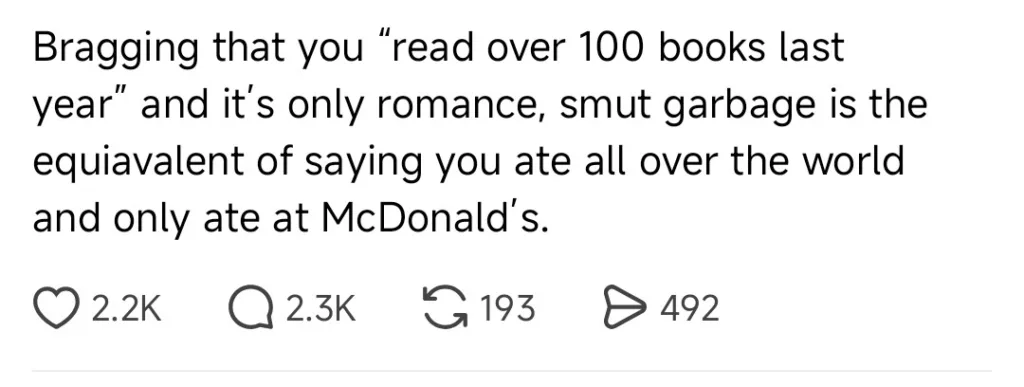
Every year, like clockwork, a discussion on social media begins: how is it possible that some people read more than 100 books a year? They must be lying! Or, at the very least, not reading properly. Ah, it’s romance they’re reading – well, that doesn’t count at all! And if someone mostly uses audiobooks? Forget about it, they’re barely a reader at this point!
If you think these opinions are wacky, just try scrolling through Threads any time between November and January in any given year. Or, if you value your sanity, don’t.
For anyone wondering (and if you want the simplest answer): yes, reading 100 books a year is not only possible, but relatively easy. You just have to like doing it better than you like watching TV, going out, and definitely more than scrolling social media. You have to like it so much that you do it while you clean, wait in line, put your kids to sleep, fold laundry, exercise, and visit the bathroom.
You can do it with a full time job and multiple kids (at the same time) (speaking from experience), you can do it with ailing parents or grandparents to take care of, you can do it no matter what your situation looks like. It just has to be your very favorite thing in the world, your escape, and the thing that gives you comfort.
But! At the same time, is reading 100 books a year that important? Do you need to do it to call yourself a reader? No, of course not! To me, the number of books someone reads is the least interesting thing about a person. I’d much rather know that you found a book that blew your socks off, that changed your perspective, that gave you something of value, even if it is just one book. Talking numbers in the bookish world is so dull and unappealing.
Reading is not a competition. But alas, at least on social media, some people see it as such.
And, you know, maybe you’re skeptical. Maybe your next year’s goal is to actually get to that coveted number. Maybe you just want to give yourself a challenge. Maybe it’s just that you’d like to read more, and you don’t know how to.
Because of that, I’m here to tell you how to read 100 books a year, easy peasy, as someone who has managed this several years in a row (to be fair, without specifically trying to do it). Hopefully, you’ll find this useful, at the very least as a guide on spending more time doing something you enjoy.
And just to be upfront, I won’t tell you to schedule reading time (because that never works for me) or to get up an hour earlier to get some reading done (because that sounds like nonsense, sleep is important, people!) or to abandon your social life and all other forms of media entirely. I still play video games and watch TV shows and movies, and hang out with my family and go outside a ton. I even spend time on social media (because sometimes, seeing other people read is inspiring, and sometimes stepping outside of the reading world is refreshing).
Reading should be fun and finishing 100 books in a year isn’t necessary. It isn’t special, people who do it aren’t better than everyone else, and it won’t change your life. But, if you’re still interested, here’s what I do and you can do too!
Try e-books
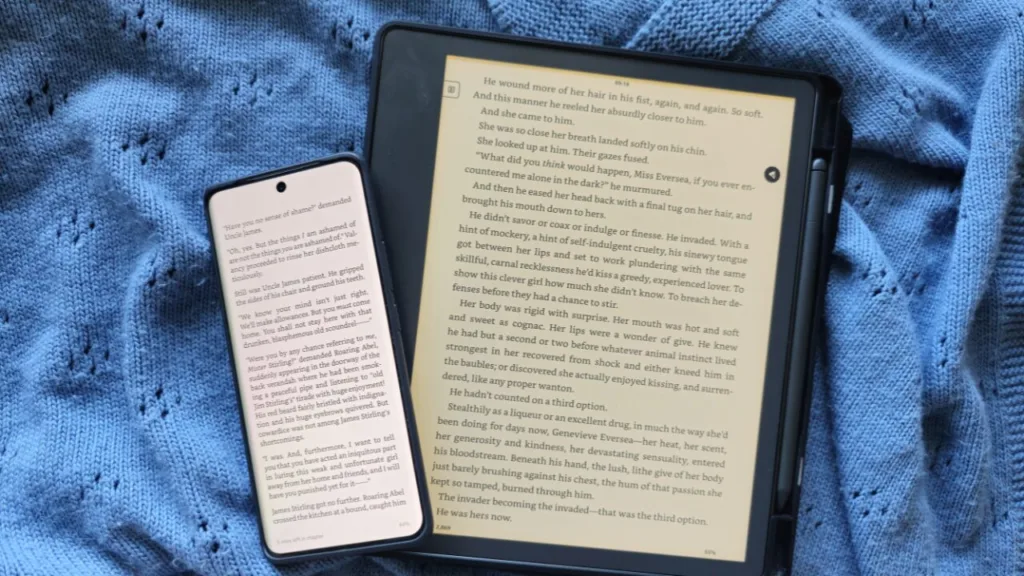
This sounds stupidly simple, but you know what, it’s just simple enough to work. For years, I refused to try e-books because, well… I was a snob. To me, only physical books were real books, and e-books would one day destroy society and literature as an art form. To be fair to myself, I was also a teenager.
But then my frontal lobe finished developing, and I soon learned that not only are e-books not the scourge on this planet, but that I also read them much faster and more consistently than physical books. This revelation came to me when I was a young, first-time mother and needed something to do during the endless breastfeeding sessions. Holding a book is impractical when you’re also holding a baby, but holding your phone, now that’s easy.
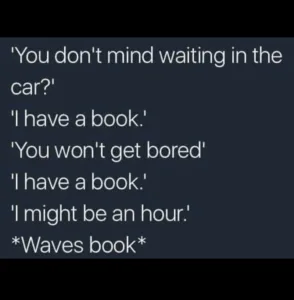
And so my love for this format began and carried me through all my other activities. Oh, are there dishes to wash? Perfect, let me just prop my phone up on this shelf and we’re good to go. Is there laundry to fold? Magnificent, I can finish my book while I’m at it. A lull in the workload at my job? Reading. Quick trip to the bathroom? Reading. Anything really – reading.
There’s this phenomenon where people read faster in e-book format, and while I never looked into the psychology of it, it held true for me. But what I think mattered more is the instant accessibility. You always have your phone on you, and that means you can access books any time. You don’t need anything extra to carry, there’s no difficulty holding the pages open, and also, no one has to know what you’re reading.
So, if you haven’t already, give e-books a try, I promise it’s worth it.
Try audiobooks
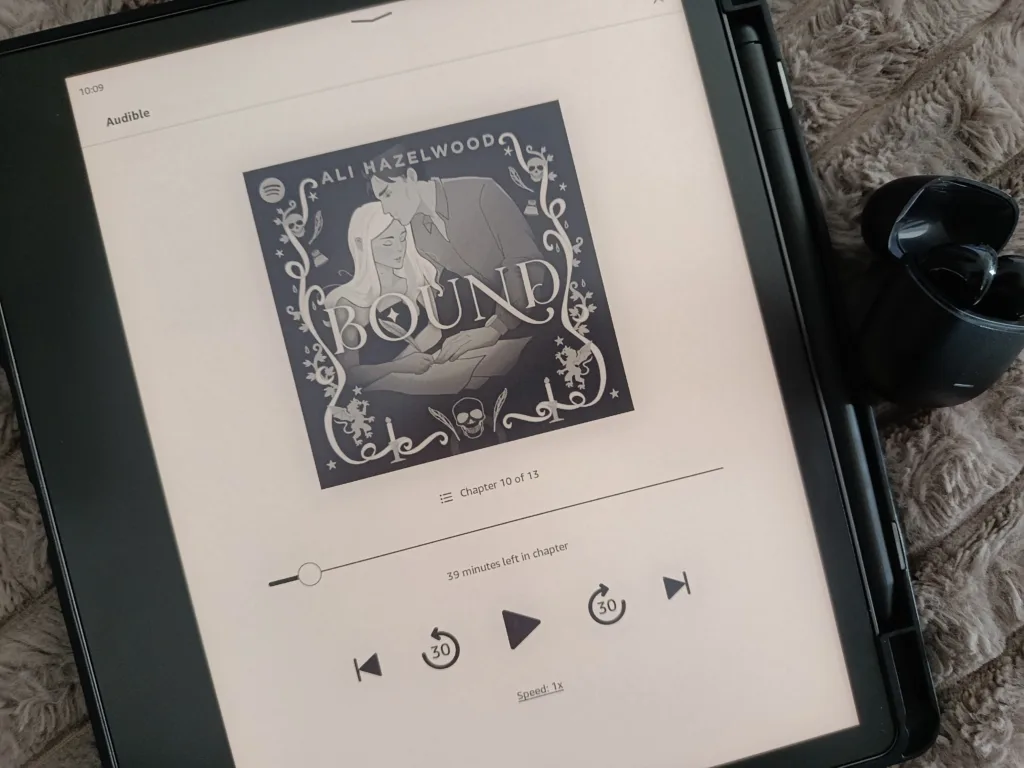
Now, to be perfectly honest with you, I’m not an audiobook person. I don’t know why, I just can’t get into it, and I tried with various genres and narrators – it just doesn’t work for me. I can’t follow a story or enjoy it as much as I enjoy having my eyes on the page. And believe me, I wish it did because my eyesight is poor and I broke the screens of too many phones by keeping them propped up against an unsuitable surface.
But if you haven’t tried audiobooks yet, they’re so worth a try.
You can listen to them while driving, doing errands, exercising, or basically anything. It’s an even more convenient format than e-books, in my opinion. And yes, it counts as reading! People are ridiculous about this, and quite ableist, I have to say, because what does it matter how you consume a story if the end result is the same.
Squeeze reading in whenever you can

I talked about this in some of the previous sections, but it bears reiterating. If reading more is your goal, try to fill the little moments up with reading. Whenever you’d reach for your phone to scroll social media, choose to read instead. And this is why I sometimes prefer phones for reading rather than e-readers, simply because it’s more easily accessible.
But my point is, whether you’re going to the bathroom, relaxing after work, cuddling in bed before sleep, having your morning coffee, or doing anything that doesn’t require 100% of your attention, just open a book.
This is how I managed to read 150 books in a year when I just had a newborn and a toddler, a house in the process of being built, myriad chores, and my job on top of that. I just squeezed reading in whenever I could, however I could.
Read what you love
People on social media like to tell people that what they love reading is wrong or not sufficient. And it makes my blood boil every time I see it happen. Look, reading is reading, it’s a form of entertainment, so please, just read whatever you like.
Do you know how many non-fiction books I could get through in a year if I forced myself to read only that? Maybe one or two, because I find them incredibly dull (sorry to all non-fiction lovers!). But romance or fantasy? Now, those I could read by the dozens.
You see what I mean? Pick a genre you find enjoyable and the rest will follow. You’ll be much more likely to return to a book (and want to return to it often, as recommended above), if what you’re reading is interesting to you.
… but also mix in something new
Reading just one genre constantly can be fun, but it’s also a surefire way to get into a reading slump. At least for me (anyone else?). For example, this summer, I mostly read historical romance. And that’s fine, it was fun and I was very into it for the longest time. But now I’m noticing that these no longer hold my attention, my reading pace is slowing down, and I’m not really happy with my reading life, I don’t come out of it satisfied.
That, to me, usually signals it’s time to switch to something else. What I normally do is try something more challenging, as a reset. Sometimes it’ll be a classic, sometimes a literary fiction book, sometimes a genre I normally avoid. (historical romance is actually how I broke out of my previous reading slump; it was not a genre I normally read so I gave it a try and what do you know, it became my next obsession)
And I highly recommend having a similar system because nothing will keep you from your reading goals more than a slump. So, as much as reading something you love is important, it’s equally important to realize when it’s time for something new.
Learn to DNF
This may sound like the opposite of what you should be doing, but it really isn’t. Nothing will put you off reading quicker than a book you’re forcing yourself through. So, learning to DNF is a good practice.
I can’t tell you how to do this because everyone is different, but I can tell you how I do it, and it might help give you some direction.
First of all, I never buy a book without reading a free sample first. Free samples are usually 10 to 15% of the whole book, and they can tell you a lot about the writing style, the pace, the characters, and more, and it can help you decide quickly if a book is for you or not.
The free sample has to pull me in and make me want to read more in order for me to buy the whole thing.
What happens after varies. Sometimes I’ll get to 60% in one go and then realize I don’t want to read more. Sometimes this will happen when I’m at 30 or 40%. The end result is the same: if I find I’m no longer excited for it, no longer hungry to see what happens, I just leave it be.
Most of the time, I’ll return to it later when I’m in a better mood for it. But generally, when I’m really into a book, I finish it within a day or two tops, and those are the ones I’m always on the lookout for.
The takeaway here is that you shouldn’t be afraid to leave books unfinished. Yes, it’s a bit annoying for tracking, but DNF-ing a book is an option at any point, be it at 30 or 90 percent, or anything in between. If you find yourself bored and uninterested, just move on to something else.
Avoid having a TBR
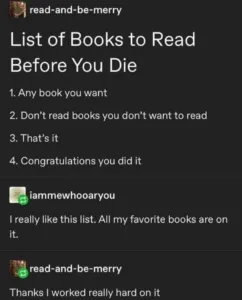
List-making is fun. Making a long list of books you want to read feels like a productive thing to do. But, TBRs can also be stressful and put you in a reading slump too.
I have a full article on what I do instead of having a TBR here, and I highly recommend giving it a read if you still want a system that works, but doesn’t feel like homework.
If you don’t have time for the full read, the gist of it is this: treat your TBR more like a library of options rather than a to-do list. It should not be a strict, prescriptive thing that you follow without straying, but rather a wish list of books that you can try if and when you feel like it.
This is true especially if you’re a mood reader – trying to force yourself into something rigid is only going to make you rebel or not want to do it at all. Go into reading with your gut and let your instincts and interests guide you to your next read.
Final Thoughts
A lot of people recommend reading a set number of pages or for a set number of hours a day. Some recommend reading journals and systems and planners. Though you’re always welcome to try those (and I even encourage it if that’s your style), I find that these tips mostly look pretty on paper, but don’t work in real life.
Everything I recommend above is what I believe is the best way to read more without making it feel like a chore. These tips should fit into your life seamlessly without feeling forced. And I do hope you find them useful. But remember, it’s not about the number of books you read, but how much you enjoy what you’re reading and what you take away from it.
What are some of the ways you get yourself to read more? Did you ever get to the magical 100 a year? Let’s chat in the comments below!
